

Key Takeaways
- We provide 24/7 emergency garage door repairs for sudden failures that create a safety, security, or access risk, with typical arrival within 60–120 minutes in most local areas, weather and traffic permitting.
- A stuck or collapsing garage door can be as serious as other emergencies, especially when it blocks vehicles during medical emergencies or slows fire department access to the house.
- We handle broken springs, snapped cables, doors off track, and doors jammed half-open; if a special part is needed, we secure the opening the same day.
- Our technicians arrive in fully stocked service vehicles, similar to how a fire station or ambulance truck rolls with equipment, so most repairs are completed on the first visit.
- Avoid DIY repair when springs or cables are involved: high-tension parts can cause serious injury, property damage, or a sudden door drop.
What Counts as an Emergency Garage Door Repair?
An emergency is an unforeseen occurrence that requires immediate action to prevent harmful outcomes. For garage doors, that meaning is simple: a sudden, unexpected situation that puts safety, security, or access at risk.
- It is 11:30 p.m., you return from work, and the door will not close, leaving tools, bikes, and the interior door to your home exposed all night.
- It is Saturday morning and you need the car for a medical appointment, urgent care visit, or possible heart attack response, but the garage door will not open.
- The door is stuck closed and traps vehicles needed for work, school, a doctor visit, or another urgent trip.
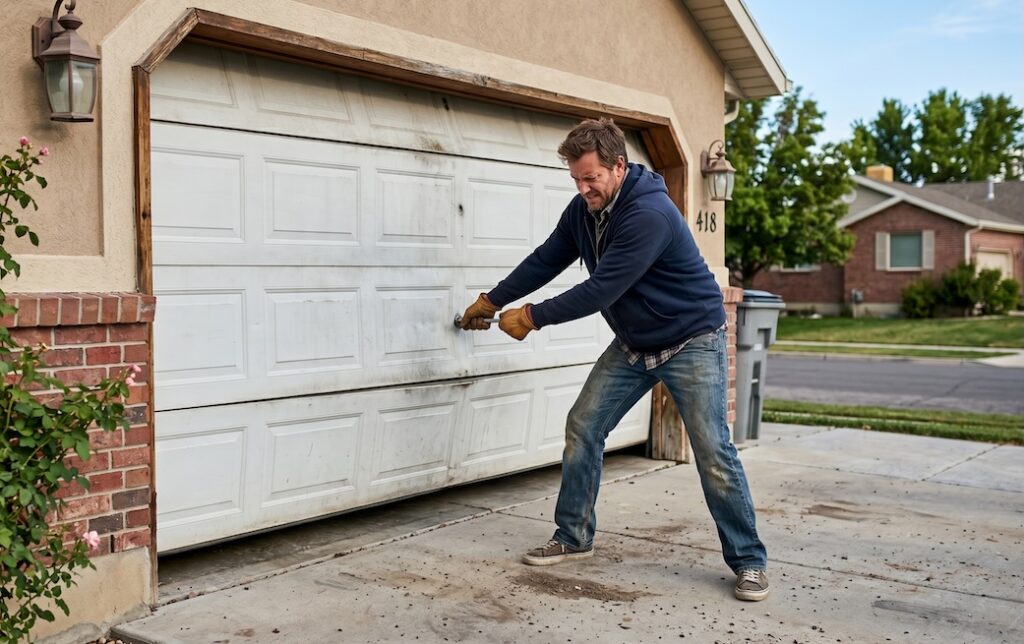
- The door is stuck half-open or off its tracks, creating a risk of falling on people, pets, or vehicles while giving intruders easy access.
- A break-in has damaged panels, locks, or the opener, and you need same-night security for the garage opening.
- Heavy rain, snow, high winds, or natural disasters turn a non-working door into a disaster risk by exposing stored items and the house entry.
- A minor issue that is ignored can develop into complete door failure, safety hazards, or more expensive structural repair later.
Immediate Safety Steps Before the Technician Arrives
In emergency situations, quick thinking and prompt action are crucial to avoid disaster, because emergencies often arise suddenly and unexpectedly. Safety comes before convenience, even if you are late, tired, or under pressure.
- Stop using the opener immediately if the door is jerking, screeching, visibly crooked, or grinding. Continuing can burn out the motor or cause the door to crash down.
- Pull the emergency release cord only if the door is fully closed and stable. If a spring or cable has failed, releasing a door stuck mid-way can make it slam shut.
- Keep children, pets, and vehicles away from the door area. Treat it like a restricted zone, similar to how the fire department isolates a hazardous area.
- Do not tighten torsion springs or reattach cables yourself. High-tension parts like torsion springs or cables should only be handled by trained professionals to avoid danger.
- Lock the interior door from the garage to the house, move valuables if safe, and use temporary wood bracing only if it can be placed without touching damaged springs, cables, or tracks.
- If anyone is injured, trapped, or in immediate danger, call 911 first rather than waiting for a garage door repair crew.
Common Emergency Garage Door Problems We Fix
Most emergency calls fall into a few predictable categories. Timely repairs of garage doors can prevent further damage to the door and the surrounding structure, which can lead to more costly repairs in the future, especially when handled by expert garage door repair services in St. George.
- Broken torsion or extension springs: You may hear a loud bang like a firecracker, then on March 3 you go to open the door and it will not budge. Broken springs can indicate a loud bang and failure to lift or a sudden drop of the door, and understanding when to try simple fixes versus calling a professional for garage door repair is critical for safety.
- Snapped or frayed lift cables: Snapped or frayed cables can create instability and pose a danger of the door falling. The door may hang crooked, jam in the tracks, grind against metal, or create a burning smell.
- Doors off track: A door that is crooked or completely off its rollers presents a severe safety hazard. This commonly happens after a car backs into the door, a ball or sports equipment hits panels, or wind gusts hit during storms.
- Opener failures: The motor runs but the door does not move, remotes stop working, sensors lose alignment, or a lightning strike or power surge damages the logic board.
- Physical damage: Attempted break-ins, collisions, bent tracks, crushed panels, and doors that will not close flush with the ground leave the garage exposed overnight.
- Alignment and sensor issues: Emergency garage door repair services typically include fixing broken springs, cables, rollers, and openers, as well as addressing issues with door alignment and garage door safety sensors.
Our 24/7 Emergency Response: What to Expect
The goal of emergency garage door repairs is to give you clear expectations: how to reach us, how fast we respond, and what happens once the technician arrives.
- Call or submit an online request anytime. Many emergency garage door repair services are available 24/7, allowing homeowners to get immediate assistance regardless of the time of day, and our after-hours calls include weekends and holidays like July 4, Thanksgiving, and Christmas Eve.
- We confirm the issue, location, door type, and whether the garage is secure. Emergency garage door services should confirm they advertise services for weekend or late-night dispatch.
- Typical arrival is within 60–120 minutes for most addresses in our core service radius. Outlying areas, storm conditions, heavy traffic, or a busy holiday week may take longer.
- On-site, the technician follows emergency action principles: check immediate hazards, power supply, springs, cables, rollers, tracks, opener, and safety controls before starting work.
- Our service vehicles carry standard torsion springs, extension springs, cables, rollers, hinges, safety sensors, remotes, and opener parts, so most homes receive a permanent repair in one visit.
- For oversized commercial doors, vintage wood carriage doors, or unusual hardware, we secure the opening the same day with bracing or temporary lock solutions, then schedule a follow-up once parts arrive, minimizing downtime from common commercial garage door issues.
- Costs for emergency garage door repair can vary widely, often ranging from $100 to $500 depending on the complexity of the issue and the parts needed.
When a Garage Door Problem Becomes a Real Emergency
A garage door issue can cross from inconvenient to serious when it affects medical, fire, police, or rescue access. Emergency medical services have evolved significantly since the 1970s, with many states enacting laws that allowed paramedics to practice advanced medical treatment during emergencies; the same lesson applies at home: rapid access saves time when life is at stake.
- A jammed door can delay medical emergencies by trapping the vehicle needed to reach an ER, hospital, urgent care, or doctor’s office, especially at night or where ambulance response times are long.
- A non-functioning garage door can slow fire department access. In real fires, firefighters may need to force entry through a garage or side door to attack the fire faster.
- If a person is trapped under or behind a collapsed door, call 911 first. That is a life-safety emergency, not just a repair issue.
- Include the garage in your emergency preparedness plan, just as a fire station thinks about access points for engines, ladders, and a paramedic team.
- In wildfires, hurricanes, floods, or other natural disasters, a working garage door can be critical for rapid evacuation, just like a clear driveway.
- The word emergency appears everywhere in daily lives but at home, it simply means protecting life, access, and safety.
DIY vs. Professional Emergency Repairs
Some checks are safe for homeowners. True emergency garage door repairs involving springs, cables, structural tracks, or a heavy door under pressure should be handled by trained technicians.
- You can safely check for obvious obstructions in the tracks, confirm photo-eye sensors are not blocked, and make sure the opener is plugged in and not in “lock” mode.
- You can watch and listen from a safe distance, but do not keep cycling the opener if the door strains, tilts, or stops.
- Any work involving torsion springs, high-tension cables, or bent structural tracks should be left to professionals because injuries can be severe enough to require emergency room care, and improper attempts to adjust misaligned garage door tracks can make the situation even more dangerous.
- Professional technicians use winding bars, clamps, high-lift jacks, and door-specific parts intended for the exact weight and system.
- Take photos or short videos before the technician arrives. This can help diagnosis and insurance claims without unsafe trial-and-error fixes, especially if you have already noticed early signs your garage door needs repair.
- It is recommended to contact a local garage door specialist for severe mechanical failures to avoid property damage or injury.
How to Prevent Future Garage Door Emergencies
Not every failure is predictable, but regular maintenance and prompt repairs can extend the lifespan of garage doors, ensuring they function properly and safely over time and helping you decide when it is time to replace your garage door.
- Schedule at least annual professional tune-ups, ideally in spring or fall, with checks on spring balance, cable wear, track alignment, rollers, opener force, and safety sensor operation.
- Perform a monthly balance test: disconnect the opener, lift the door halfway by hand, and see if it stays in place. Record the date, such as “last checked April 2026.”
- Lubricate hinges, metal rollers, and springs every 3–4 months with proper garage door lubricant to reduce friction, noise, and wear.
- Replace openers older than about 15–20 years with modern models that include automatic reversal, photo-eyes, and rolling-code security.
- Keep storage, ladders, tools, and bikes away from tracks. A smart habit like keeping the area clear can prevent a derailment when an object falls into the path.
- Do not ignore minor issues. Small squeaks, slow movement, loose hinges, and sensor problems can occur before a complete failure.
Choosing the Right Emergency Garage Door Repair Service
In an emergency, many people call the first number they find. A quick check can help you avoid poor workmanship, upselling, or paying twice for the same repair.
- Look for clearly stated 24/7 emergency availability, not just “same-day service,” and confirm real human phone support after 9 p.m., along with a proven track record from a trusted local garage door company.
- Finding a reliable emergency garage door service should include checking for 24/7 availability, proper licensing and insurance, and upfront estimates.
- Ask for proof of liability and workman’s compensation insurance from a garage door service provider, especially before major repairs.
- Confirm technician training, licensing where required, and insurance coverage, similar to how a city verifies contractors working near a fire station or public department facility.
- Ask for upfront estimates or transparent price ranges by phone, including any after-hours, weekend, or holiday surcharges.
- A clear, written cost breakdown should be demanded before agreeing to major repairs to avoid upselling.
- Before hiring a garage door service, check local ratings on platforms like Google or Yelp for reviews of their reliability, especially reviews mentioning emergency calls, response time, and late-night service.
- Inquire about labor and parts guarantees to ensure you are not paying for a failed fix.
- A reputable company will prioritize safety over the cheapest deal and will not reuse dangerously cracked springs, badly frayed cables, or bent tracks, a standard that is especially important for top-rated commercial garage door services.
FAQ: Emergency Garage Door Repairs
How fast can you get to my home for an emergency garage door repair?
In our core service area, emergency garage door repairs are usually handled with an arrival window of 60–120 minutes. Exact timing depends on traffic, weather, time of day, technician availability, and whether the call is during a major storm or holiday rush.
Is a broken garage door spring always an emergency?
A broken spring is an emergency if it traps vehicles, leaves the door unstable, happens late at night, or creates a security issue. In some daytime situations, it may be scheduled as same-day service, but the door should not be operated or repaired by an untrained person.
Will my homeowners’ insurance cover emergency garage door repairs?
Coverage depends on your policy and the cause. Storm damage, vandalism, or a vehicle impact may be covered, while normal wear and tear usually is not. Photograph the damage, keep invoices, and contact your insurer for specific guidance.
Should I call 911 or an emergency garage door company first?
Call 911 first if anyone is injured, trapped, or if there is fire, smoke, a suspected gas leak, or another threat to life or health. If the problem is only mechanical failure, loss of access, or a security concern with no immediate danger to life, call an emergency garage door repair service instead of tying up fire department or medical resources.
Can you repair very old or custom wood garage doors during an emergency call?
Usually, yes for stabilization and security. Technicians can often brace the door, add temporary hardware, or secure the opening on the first visit, but full restoration of older or custom wood doors may require special-order parts and a follow-up appointment within a few days.
If your garage door has failed, do not force it. Call for emergency garage door repairs, keep the area clear, and let a trained technician restore safe access before the damage spreads.