

Squeaky Garage Door
Is your garage door squeaky every time you open or close it? You’re not alone. At Mehr’s Garage Doors, we understand how disruptive a noisy garage door can be. Whether it’s early morning or late at night, those irritating sounds—or even loud noises—could be a warning sign of underlying mechanical issues.
This comprehensive guide explains:
- What causes a squeaky garage door
- How to fix it yourself (the right way)
- When to call a professional garage door technician in St. George, UT
Common Causes of a Squeaky Garage Door
1. Dry or Worn Rollers
Metal rollers can cause loud grinding or squeaking noises. Worn bearings inside the rollers or damaged roller shafts can also contribute to squeaks and should be checked during maintenance. Upgrading to nylon rollers is a smart move—they’re much quieter and require less maintenance.
2. Loose Hinges, Bolts & Hardware
Vibrations loosen parts over time. A loose hinge or bolt allows components to rub together and squeak. Tighten all fasteners every 6 months.
Also, check that each hinge pin and other pins are properly lubricated and that they are not too tight or too loose, as improper pin tension can cause squeaks.
3. Bent or Misaligned Tracks
Garage door tracks guide your door’s movement. If they become bent or out of alignment (often from foundation shifts or accidental impact), rollers may drag and cause noise. Inspect for gaps between the rollers and the tracks, as these gaps can lead to squeaking or difficulty in operation. Also, check the edges of the tracks for any damage or misalignment, since damaged or misaligned edges can contribute to squeaks and improper door movement.
4. Rusty or Damaged Springs
Garage door springs under tension can produce loud squeaks when they age or corrode. If you suspect spring problems, do not attempt DIY repairs—these are dangerous and require a pro. Springs operate under high pressure, and sometimes even after lubrication, they may need to be replaced if squeaking persists.
5. Lack of Proper Lubrication
Neglected lubrication is a top cause of noisy garage doors. Without it, moving parts grind against each other.
To fix this, use a spray lubricant such as silicone spray, garage door lube, or grease, and apply a thin coat to all hinges, rollers, tracks, and other moving parts.
How to Diagnose the Squeaky Sound
- Visual Inspection: Look for damage or wear on rollers, hinges, springs, and tracks.
- Listening Test: Open/close the door and listen for where the squeak originates. Be careful to hear subtle differences in noise location, as this can help pinpoint the exact source of the squeak.
- Manual Test: Disconnect the opener and move the door by hand. This reveals friction points.
Following a careful process when diagnosing garage door issues helps ensure you identify the root cause and address it effectively.
Best Way to Lubricate a Squeaky Garage Door
Use the Right Lubricant
Avoid WD-40. Instead, use a silicone-based or lithium-based garage door lubricant, designed to endure temperature swings and heavy motion. You can find silicone-based or lithium-based garage door lubricants at your local hardware store.
Parts to Lubricate:
- Rollers (shaft only, not nylon wheels)
- Hinges (pivot points)
- Springs (lightly across coils)
- Bearing plates
- Arm bar and opener chain (also inspect and lubricate other garage door opener components; note that belt drive systems generally operate more quietly and smoothly than chain drive systems, so if noise persists, consider the type of opener mechanism you have)
Apply a thin layer and wipe off excess to prevent dust buildup. Lubricate every 6 months, or quarterly in harsh climates.
Fixing Hardware & Track Issues
Tightening Hardware
Use a socket wrench or screwdriver to tighten loose bolts and screws—but don’t overtighten.
Aligning Tracks
Check track alignment with a level. If the gap between roller and track is uneven, loosen mounting brackets, reposition, and re-tighten.
Adjusting Springs (Call a Pro!)
Garage door spring adjustments are dangerous due to high tension. Call Mehr’s Garage Doors for professional spring repair in St. George.
When to Replace Garage Door Parts
Worn Rollers
Rollers typically last 10–15 years. Replace if cracked, chipped, or noisy—even after lubrication. Nylon rollers are a quiet upgrade.
Rusty Hinges
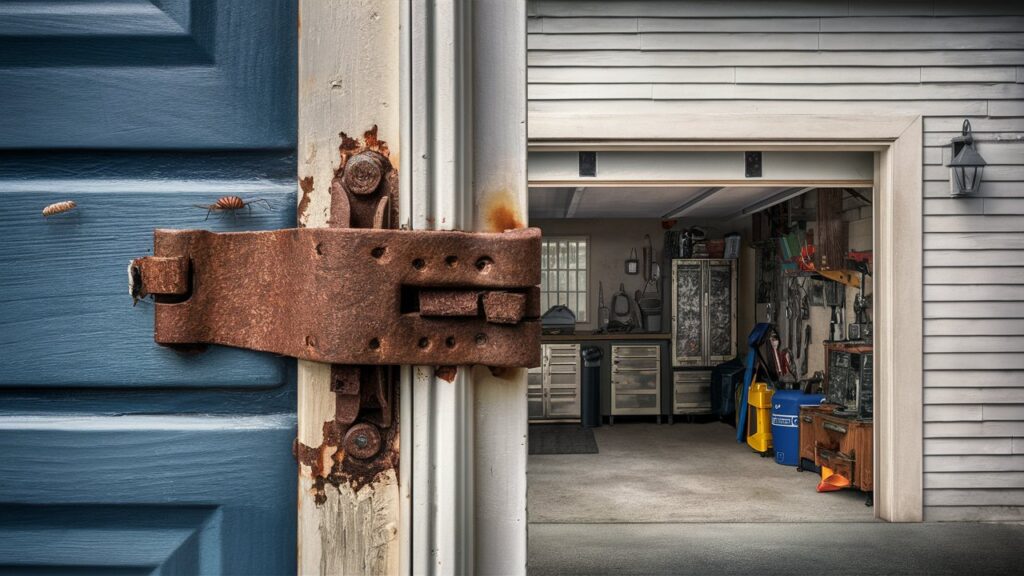
If you notice rust, cracks, or deformation in your hinges, it’s time for a replacement.
Old Springs
Torsion springs have a life of 10,000–15,000 cycles. If your door struggles to lift evenly or the coils appear stretched or gapped, call us for safe spring replacement.
Preventive Maintenance Tips
Clean Regularly
Wash door panels, tracks, and hinges every 3–4 months with mild soap and water. Dirt buildup leads to friction and noise.
Also, clean the garage floor regularly to prevent debris from interfering with the garage door’s movement.
Lubrication Schedule
Why Is My Garage Door Squeaky?
Stick to a twice-a-year routine—or more frequently if your garage door sees heavy use or extreme weather.
Annual Professional Inspection
Mehr’s Garage Doors offers annual tune-ups to catch small issues before they turn into major repairs.
When to Call a Professional
DIY Isn’t Always Safe
Avoid attempting to fix springs, opener motors, or cables yourself. These parts are under high tension and can cause serious injury.
Signs You Need Professional Help:
- Loud spring or cable noises
- Door moves unevenly
- Severe misalignment
- Broken rollers, hinges, or opener
Let our St. George garage door experts handle the tough repairs safely and correctly.
Trusted Garage Door Service in St. George, UT
At Mehr’s Garage Doors, we’re proud to be a trusted provider in the St. George market, serving St. George and surrounding areas with fast, reliable garage door service. Whether you need help with a squeaky garage door, a spring replacement, or a full system tune-up, we’re here for you.
Frequently Asked Questions
How often should I lubricate my garage door?
Every 6 months for standard use. More frequently in cold or dusty environments.
What’s the best garage door lubricant?
Silicone-based or lithium-based sprays. Avoid WD-40.
Can I adjust garage door springs myself?
No. This is highly dangerous. Always call a professional.
When should I replace my garage door rollers?
If they’re over 10 years old, cracked, or squeaking even after lubrication.
Do I need a professional inspection every year?
Yes! Annual inspections prevent expensive breakdowns and safety issues.