

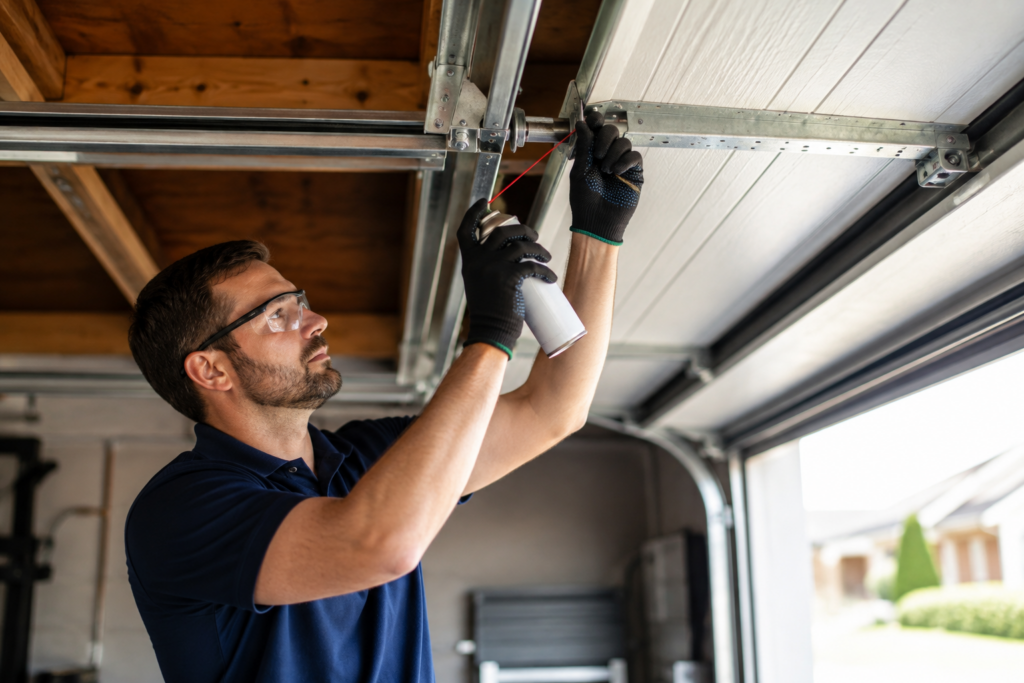
How to fix squeaky garage door? A squeaky garage door is almost always caused by dry or dirty hardware, and in most cases you can fix it yourself by cleaning the tracks, rollers, and hinges, then applying a silicone based lubricant to every moving metal part. If the noise continues after lubrication, the problem is usually worn rollers, loose hardware, or a spring that needs attention from a trained technician. Below, we walk you through the exact process we use when our own team gets called out for this issue, so you can try it at home before deciding whether a service call is needed.
Why Your Garage Door Is Squeaking
At Mehrs Garage Door, this is one of the most common calls we get, and it rarely means something is seriously wrong. Garage doors have somewhere between twenty and thirty moving metal parts, and every one of them relies on lubrication to move smoothly. Once that lubrication dries out or collects dust, metal starts rubbing against metal, and that friction is what you’re hearing.
Common causes include:
- Dry or worn rollers, especially older metal ones
- Dirt, dust, or old grease buildup inside the tracks
- Loose hinges, nuts, or bolts that shift slightly with every cycle
- Worn out or unlubricated springs
- A door that has fallen slightly out of alignment
- An opener chain or belt that needs adjustment
Homeowners often assume a noisy door means the whole system is failing, but our technicians find that a large majority of squeak related calls are resolved with cleaning and lubrication alone. It is one of the easiest home maintenance jobs a homeowner can handle without any special tools.
Common Causes and Quick Fixes
| Symptom | Likely Cause | Recommended Fix |
| Squeak on the way up only | Dry rollers or dry hinges | Clean and lubricate rollers and hinge pins |
| Grinding or metal on metal sound | Worn rollers | Replace rollers, lubricate track |
| Rattling plus squeaking | Loose hardware | Tighten all visible bolts and brackets |
| Squeak paired with jerky movement | Misaligned track | Adjust track alignment carefully |
| Loud creak near the top of the door | Dry or aging spring | Lubricate spring, avoid DIY spring repair |
How to Fix a Squeaky Garage Door in Six Steps
- Disconnect the opener. Pull the release cord so you can move the door by hand safely, and always keep the door in a closed or fully open position while you work, never halfway.
- Inspect every part. Walk the full length of both tracks and check rollers, hinges, springs, and the top rail for dust, rust, or visible wear.
- Clean before you lubricate. Wipe down tracks and hardware with a dry cloth to remove old grease and debris. Skipping this step just traps dirt under new lubricant.
- Apply the right lubricant. Use a silicone based spray, not household oil or WD-40, since oil attracts dust and can gum up the mechanism over time.
- Tighten loose hardware. Go bolt by bolt along the track brackets and hinges with a socket wrench, checking for any give.
- Test the door. Reconnect the opener and run the door up and down a few times, listening for the exact spot where noise remains.
If the squeak is gone after these steps, you’re done. If it persists, particularly around the spring or if the door feels heavy or uneven, it’s time to stop and call in help rather than risk injury.
When to Call a Professional
Springs are under extreme tension and are genuinely dangerous to handle without training. If your inspection reveals a stretched, rusted, or gapped spring, do not attempt a repair yourself. This is exactly the kind of situation where a proper garage door repair service pays for itself, since a technician can diagnose the root cause in minutes and prevent a small issue from becoming a full system failure or, worse, a safety incident.
A few warning signs that go beyond a simple lubrication fix:
- The door shudders or hesitates at certain points
- One side appears higher than the other
- Cables look frayed or off their pulley
- The noise is accompanied by a burning smell from the opener motor
- The door has become noticeably heavier to lift by hand
What We See in the Field
Our technicians log service calls across residential neighborhoods, and squeaking hardware consistently ranks among the top reasons homeowners request a visit, usually just behind opener malfunctions. Doors that receive lubrication twice a year last significantly longer before needing roller or hinge replacement compared to doors that are never maintained. A garage door cycles up and down roughly four times a day in an average household, which adds up to well over a thousand cycles a year on hinges, rollers, and springs. That volume of movement is exactly why routine care matters so much.
We also work with local business owners who rely on heavier duty systems, and the maintenance principles carry over directly. Commercial Garage Doors in St George see far more daily cycles than a typical residential door, sometimes running dozens of times per day at a warehouse or auto shop, which means squeaks and hardware wear show up faster and need attention sooner rather than later.
Maintenance Tips to Prevent Future Squeaks
- Lubricate rollers, hinges, and springs every six months
- Wipe tracks clean of dust and debris monthly
- Visually inspect cables and springs for wear each season
- Keep the area around the tracks free of clutter and moisture
- Schedule a professional tune up once a year, even if the door seems fine
Conclusion
A squeaky garage door is usually a small problem with a simple fix, and most homeowners can resolve it in under an hour with basic tools and a little patience. Clean the moving parts, lubricate properly, tighten what’s loose, and pay close attention to the spring, since that’s the one component that genuinely calls for caution. At Mehrs Garage Door, we’d rather see you catch these issues early with routine care than deal with a full breakdown down the road.
FAQ:
1. What is the best lubricant for a squeaky garage door?
A silicone based spray lubricant works best. Avoid WD-40 or household oil, since they attract dust and dirt that can clog the tracks and rollers over time.
2. How often should I lubricate my garage door?
Twice a year is enough for most residential doors. Homes in dusty or humid areas may benefit from a quick check every few months.
3. Can I fix a squeaky garage door myself, or is it risky?
Cleaning and lubricating hinges, rollers, and tracks is safe for most homeowners. Springs are the one part to leave alone, since they carry high tension and can cause injury if handled incorrectly.
4. Does a squeaky door mean I need a new garage door opener?
Not usually. Most squeaks come from dry hardware, not the opener itself. If the noise is paired with jerky movement or a burning smell from the motor, that’s when the opener should be inspected.
5. When should I call a technician instead of fixing it myself?
Call for help if the door feels heavier than usual, moves unevenly, or if you notice frayed cables or a stretched spring. These signs point to issues beyond routine maintenance.