

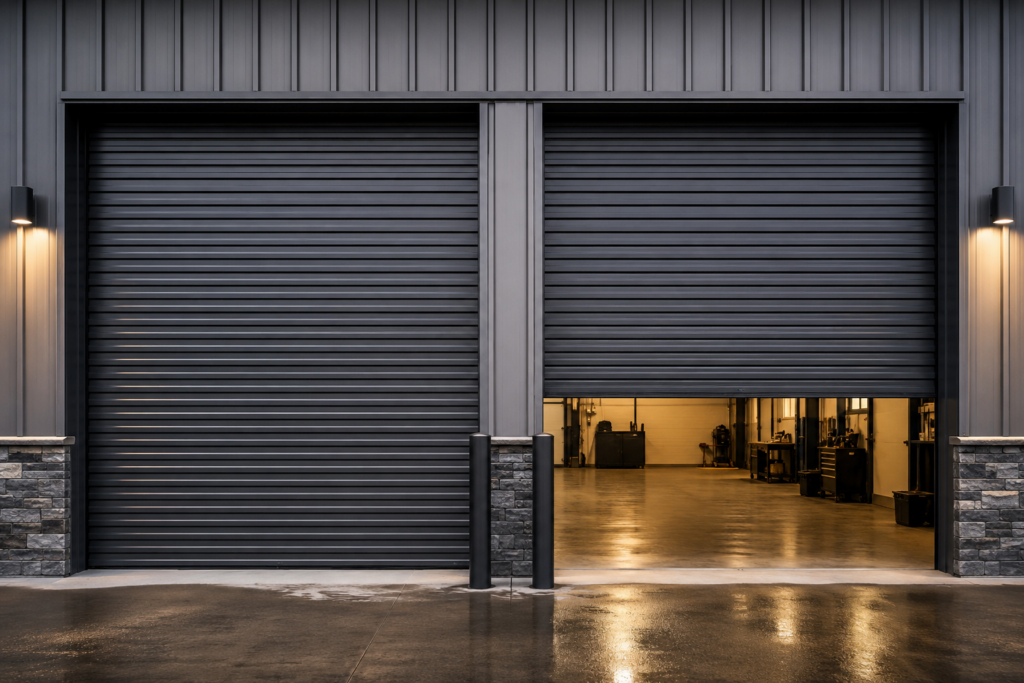
There is a small warehouse owner in Southern Utah who once joked that he was “paying to cool the parking lot.”
At first, everyone laughed.
But after walking through his building during a July afternoon, the problem became obvious. The air conditioner was running full blast, yet the back half of the warehouse still felt warm and dusty. Near the loading area, hot air kept creeping inside every few minutes. Employees had placed a large fan near the entrance just to make the space bearable.
The strange part was that the HVAC system was not old at all.
The real issue ended up being the garage doors.
Upgrading to Commercial Steel Garage Doors can significantly improve energy efficiency and comfort in your warehouse.
They were older steel doors with almost no insulation left inside. From the outside, they looked perfectly fine. But every time the doors opened, cool air escaped almost instantly, and the building struggled to recover.
That story is not unusual.
A lot of business owners focus on equipment upgrades, lighting improvements, or newer cooling systems while ignoring one of the largest openings in the entire building.
And over time, that oversight gets expensive.
Why Do Commercial Buildings Lose So Much Energy Around Garage Doors?
Commercial spaces operate differently from homes.
Doors open constantly throughout the day. Delivery trucks arrive. Employees move inventory. Customers enter service areas. Forklifts pass through loading bays every hour.
Now picture all of that happening in the middle of summer or during freezing winter mornings.
Without insulation, steel doors transfer outdoor temperatures surprisingly fast. The metal heats up quickly under direct sunlight and allows that heat to affect indoor temperatures. In colder months, the opposite happens. Cold air settles around the door area and spreads through the building.
Most people do not notice the energy loss immediately because it happens gradually. The HVAC system simply keeps working harder to compensate.
Then, eventually, the utility bill arrives, and everyone starts wondering why costs keep increasing.
That is one reason many businesses are now investing in insulated commercial steel garage doors instead of continuing to patch older systems year after year.
What Actually Makes Insulated Doors Different?
A standard commercial door is often just a single layer of steel.
Insulated doors are built with additional layers and thermal insulation materials inside. That extra barrier slows down how quickly outside temperatures affect the interior of the building.
It sounds simple, but the difference can feel surprisingly noticeable in real life.
One employee at an automotive shop mentioned that the work bays near the entrance finally felt comfortable enough during winter that technicians stopped bringing portable heaters from home.
Little details like that matter more than people realize.
A building that maintains stable temperatures simply feels easier to work in every day.
Can Insulated Garage Doors Really Reduce Utility Bills?
For many businesses, yes.
The amount varies depending on building size, weather conditions, and how frequently the doors are used, but reducing temperature loss almost always helps heating and cooling systems operate more efficiently.
According to the U.S. Department of Energy, heating and cooling account for a major portion of commercial energy use. Large openings with poor insulation can increase energy waste significantly.
What surprises many owners is how long the HVAC system runs before they notice there is a problem.
If cool air constantly escapes during summer, the system keeps cycling longer to maintain the thermostat setting. The same happens during winter when heated air disappears through poorly insulated areas.
Over months and years, that extra workload increases operating costs and adds wear to expensive equipment.
Why Are Steel Doors So Common for Commercial Buildings?
Durability.
Commercial properties are rough on equipment.
Forklifts bump loading zones. Heavy traffic creates constant vibration. Weather conditions shift throughout the year. Some doors open dozens of times daily without much rest.
Steel handles that environment better than many lightweight materials.
That is why businesses using commercial shop doors often prefer insulated steel models for warehouses, mechanic shops, storage facilities, and industrial buildings. They need doors that can handle constant activity without becoming a maintenance nightmare.
And honestly, most business owners are already juggling enough daily problems. Nobody wants to deal with another avoidable repair issue.
Does Better Insulation Really Affect Employees?
Absolutely.
People working near loading areas usually feel the problem first.
During summer, some parts of the building become frustratingly hot by the afternoon. During winter, cold air settles near entrances and makes long shifts uncomfortable.
Employees notice those things even if management does not initially realize it.
A comfortable workspace changes how a building feels. Workers stay focused longer, customers feel more comfortable inside the property, and daily operations become smoother overall.
That improvement is difficult to measure on paper, but people feel it almost immediately.
When Should Businesses Replace Older Garage Doors?
Sometimes the signs are obvious.
The door becomes noisy, unreliable, dented, or difficult to open. Other times, the warning signs build slowly over several years.
Business owners may notice:
- Increasing utility costs
- Drafts near entrances
- Uneven indoor temperatures
- More outside noise inside the building
- Condensation forming around door panels
- Frequent maintenance appointments
Many companies continue spending money on temporary fixes long after replacement would actually save them money.
In some situations, repeated Garage Door Repair Services become a sign that the door system itself is reaching the end of its lifespan rather than experiencing isolated problems.
Is Upgrading Worth the Cost?
That depends on how long a business plans to stay in the building.
But for many owners, the answer becomes clear once they experience the difference firsthand.
Lower utility costs help. Reduced maintenance matters too. But comfort, reliability, and peace of mind are often the biggest reasons people stop regretting the investment.
Nobody enjoys walking into a building every day knowing the temperature will never feel right no matter how hard the HVAC system works.
A properly insulated garage door helps remove that frustration.
Conclusion
Energy efficiency is not always about major renovations or expensive technology upgrades. Sometimes the biggest improvements come from fixing the parts of a building that people overlook every day.
Insulated commercial steel garage doors help businesses reduce energy waste, improve comfort, lower strain on HVAC systems, and create a more stable working environment throughout the year.
And for many owners, the biggest benefit is simple. The building finally feels like it is working properly again.
If your current doors are outdated, inefficient, or becoming expensive to maintain, it may be time to explore a better long-term solution.
To learn more about commercial garage door installation and replacement options, contact Mehr’s Garage Doors today:
Mehr’s Garage Doors Contact Us
Frequently Asked Questions
1. Do insulated garage doors really make a noticeable difference in energy bills?
Yes, especially in buildings where garage doors open often throughout the day. Many business owners notice their heating and cooling systems do not run as aggressively after upgrading to insulated doors. The savings may not appear overnight, but over time the reduced energy loss can make a real difference.
2. How long do insulated commercial garage doors usually last?
A well-installed insulated steel door can last for many years if it is maintained properly. The lifespan often depends on daily usage, weather exposure, and how regularly the door is serviced. Businesses with heavy daily traffic may need maintenance more often, but quality steel doors are built to handle demanding environments.
3. Are insulated doors only useful in colder climates?
Not at all. They are just as useful in hot climates because insulation helps keep outside heat from entering the building. In places with intense summer temperatures, insulated doors can help maintain a more comfortable indoor environment and reduce strain on cooling systems.
4. What are the signs that a commercial garage door needs replacement instead of repair?
If the door constantly breaks down, makes unusual noises, has visible damage, or causes uneven indoor temperatures, replacement may be the smarter option. Some older doors simply become inefficient over time, even after multiple repairs.
5. Can insulated garage doors help reduce outside noise inside the building?
Yes, they often help more than people expect. The added insulation can reduce noise from traffic, equipment, wind, and nearby activity. This is especially helpful for businesses where employees spend long hours working near loading bays or service areas